Content
Pick the welding method from the joint, the material and the volume. MIG is the fast all-rounder for carbon steel and thicker sheet. TIG gives the cleanest weld on thin stainless steel and aluminum but is slow. Spot welding is the lowest-cost way to join overlapping thin sheet in volume. Laser welding gives the narrowest seam and the least distortion, and it pays back when parts are fit up tightly and the line runs steadily.
Sheet metal fabrication rarely uses one method alone. An enclosure may have spot-welded internal brackets, a TIG-welded stainless seam on the visible corner and a laser-welded lid. This guide compares MIG, TIG, spot and laser welding on heat input, distortion, speed, skill, cost and best-fit parts, so you can specify the right process on your drawing.
A consumable wire electrode is fed through a gun with shielding gas. It deposits metal quickly and tolerates imperfect fit-up. It suits carbon steel and stainless fabrication, brackets, frames and thicker sheet. Spatter and a wider heat-affected zone are the trade-offs on thin material.
A non-consumable tungsten electrode makes the arc, and filler rod is added by hand or by wire feeder. The weld is clean, controlled and nearly spatter-free, which makes it the usual choice for thin stainless steel, aluminum and visible seams. It is the slowest of the four and needs a skilled welder.
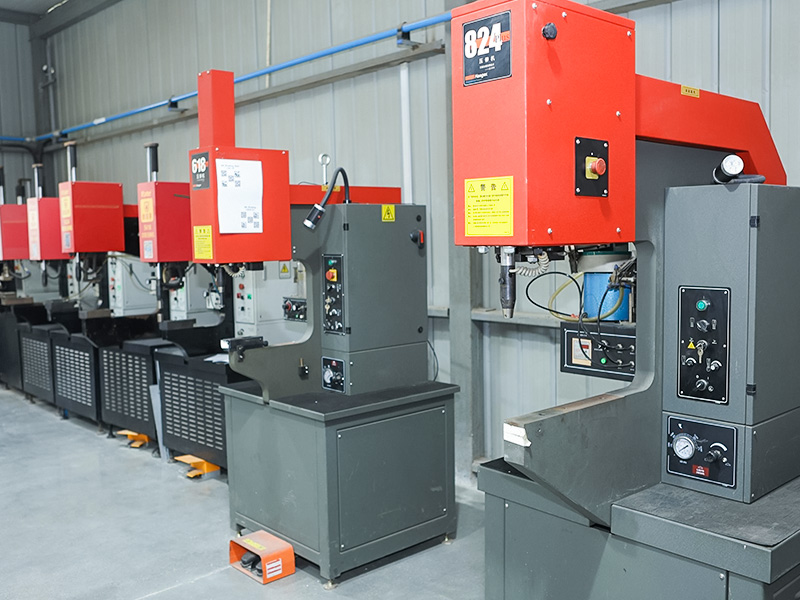
Two copper electrodes clamp overlapping sheets, and current passing through them melts a small nugget between the sheets. No filler or gas is needed, and each weld takes a fraction of a second. It is limited to lap joints that electrodes can reach, but it is the most economical option for thin-sheet assemblies in volume.
A focused laser beam melts a narrow seam with low heat input. Distortion is low, the seam is neat and speed is high. Fit-up must be tight and fixtures accurate. Robotic 3D systems handle complex parts, and handheld systems bring laser welding to short or irregular seams with less operator training than TIG.
| Factor | MIG | TIG | Spot | Laser |
| Heat input | Medium to high | Medium | Local and brief | Low |
| Distortion | Moderate | Low to moderate | Low | Very low |
| Speed | Fast | Slow | Very fast per spot | Very fast |
| Joint type | Butt, fillet, lap | Butt, fillet, corner | Lap only | Butt, lap, corner, edge |
| Fit-up tolerance | Forgiving | Moderate | Needs sheet contact | Tight |
| Operator skill | Moderate | High | Low | Low to moderate |
| Consumables | Wire and gas | Rod, tungsten and gas | Electrode tips | Gas, optics, sometimes wire |
| Equipment cost | Low to medium | Low to medium | Medium | High |
MIG is the standard, with spot welding for lap joints on thin sheet. Laser welding suits high-volume parts with consistent fit-up. TIG is rarely needed unless appearance or thin gauge demands it.
TIG gives the cleanest seam and best corrosion behavior on visible joints. Laser welding reduces heat tint and distortion on thin stainless panels. Spot welding works for internal lap joints. Keep heat low to protect the surface finish.
TIG with AC current is the traditional choice, and pulsed MIG is common for production. Aluminum conducts heat quickly and reflects laser light, so laser welding needs suitable equipment. Spot welding aluminum requires higher current and electrode care.
Thickness matters as much as material. Thin sheet is sensitive to heat, which favors TIG, spot and laser. Thicker sheet and plate need the deposition rate of MIG. Whatever you choose, flat and accurate blanks make every process easier, which is why flattening and clean cutting come before welding. Read Precision Sheet Metal Components for how cutting and bending tolerances stack up at the weld joint.
Welding cost is not only the welder's hour. It includes fixtures, consumables, cleanup and rework.
Surface finish after welding is a separate cost. Weld marks, heat tint and spatter all need polishing or cleaning before coating, which is why the welding method and the finishing plan should be chosen together. See the process order in Automated Spray Coating System Guide.
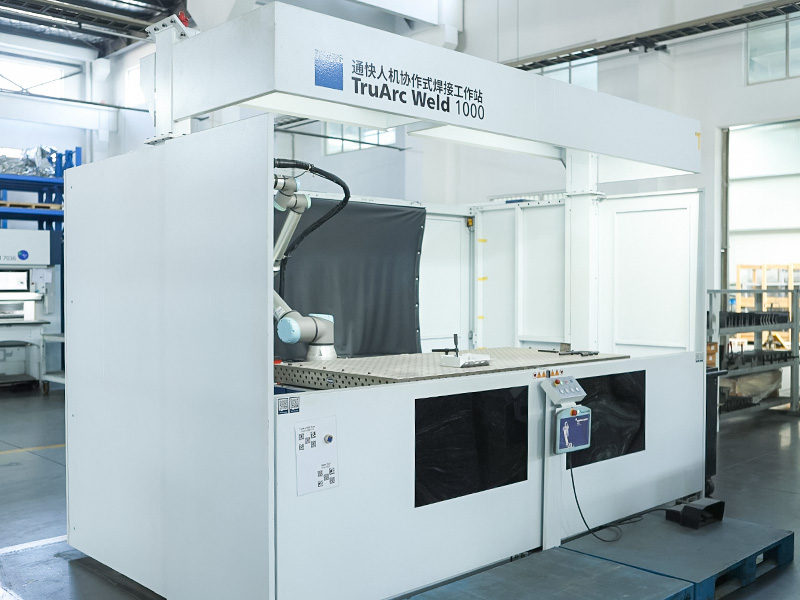
Our welding line covers TIG welding, resistance spot welding, a robotic 3D laser welding machine with a 6 kW fiber laser, a 3D laser cutting and welding machine tool and a handheld fiber laser welding system, so a single supplier can match the process to each joint on your part. We build custom automatic welding solutions that connect to cutting and bending, and the details are on our welding equipment page. For where welding sits in the full production sequence, read Custom Sheet Metal Fabrication.
For production runs with tight fit-up, laser welding is faster and distorts less, with a narrower seam. TIG is more tolerant of gaps and better for low volume, repairs and irregular joints. Choose by volume and fit-up quality.
Only for overlapping joints that electrodes can reach. It cannot make butt joints or continuous seals, so parts that need a sealed or structural seam still need MIG, TIG or laser welding.
Heat expands the local area, and the cooled weld shrinks and pulls the sheet. Lower heat input, shorter or staggered welds, good clamping and low-heat processes such as laser or spot welding reduce warping.
Operators typically learn it faster than TIG because the process is less dependent on precise torch and filler control. Safety training for laser use is still required, and joint preparation still matters.
Laser and spot welding usually need the least cleanup, and TIG produces a clean bead with little spatter. MIG tends to need the most spatter removal and grinding on visible parts.
Yes, and it helps accuracy because the same team controls blank quality, bend angles and weld fit-up. Share your drawings through the contact page for a combined quote.










 +86-13771171111 +86-13338110517


 English
 中文简体
 日本語
 Deutsch
 Español
 Bahasa Melayu