Content
Choose a press brake when your shop bends a wide mix of parts, thick or long material, deep box forms and frequent small batches. Choose a panel bender when you run repeat orders of thin-gauge panels, enclosures, doors and cabinet shells that have several bends per part and need little operator handling. Press brakes win on flexibility and capacity. Panel benders win on cycle time and labor for the right part family, and many growing shops end up running both.
This guide compares the two machines by how they bend, what they cost to run, which parts suit each one, and how to decide with your own part list instead of a catalog headline. It ends with a short decision routine you can run in an afternoon.
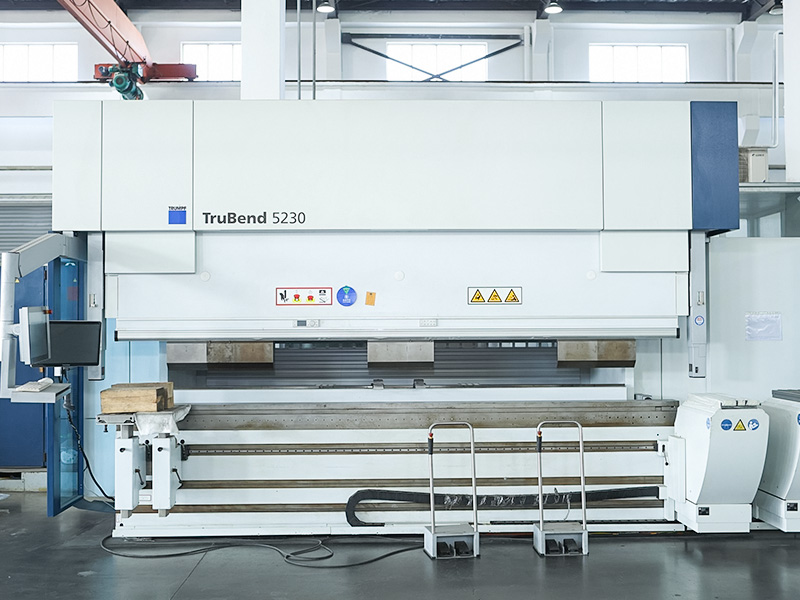
A press brake clamps a punch and a die into a ram and a bed. The operator or a robot places the sheet over the die, a back gauge sets how far the edge reaches in, and the ram presses the sheet into the die to form the angle. After each bend the part is repositioned, and for a box with four flanges the operator may turn and flip the part several times. Our guide How Does a Press Brake Work? covers the mechanics and tonnage in more detail.
A panel bender works differently. A manipulator grips the sheet and feeds it into a fixed blank holder, and a bending beam with an upper and a lower blade folds the edge up or down. The manipulator rotates and repositions the sheet between bends, so the part is folded on all sides without the operator touching it. Because the blades move up and down, the machine can make positive and negative bends in one setup and does not need the part flipped by hand.
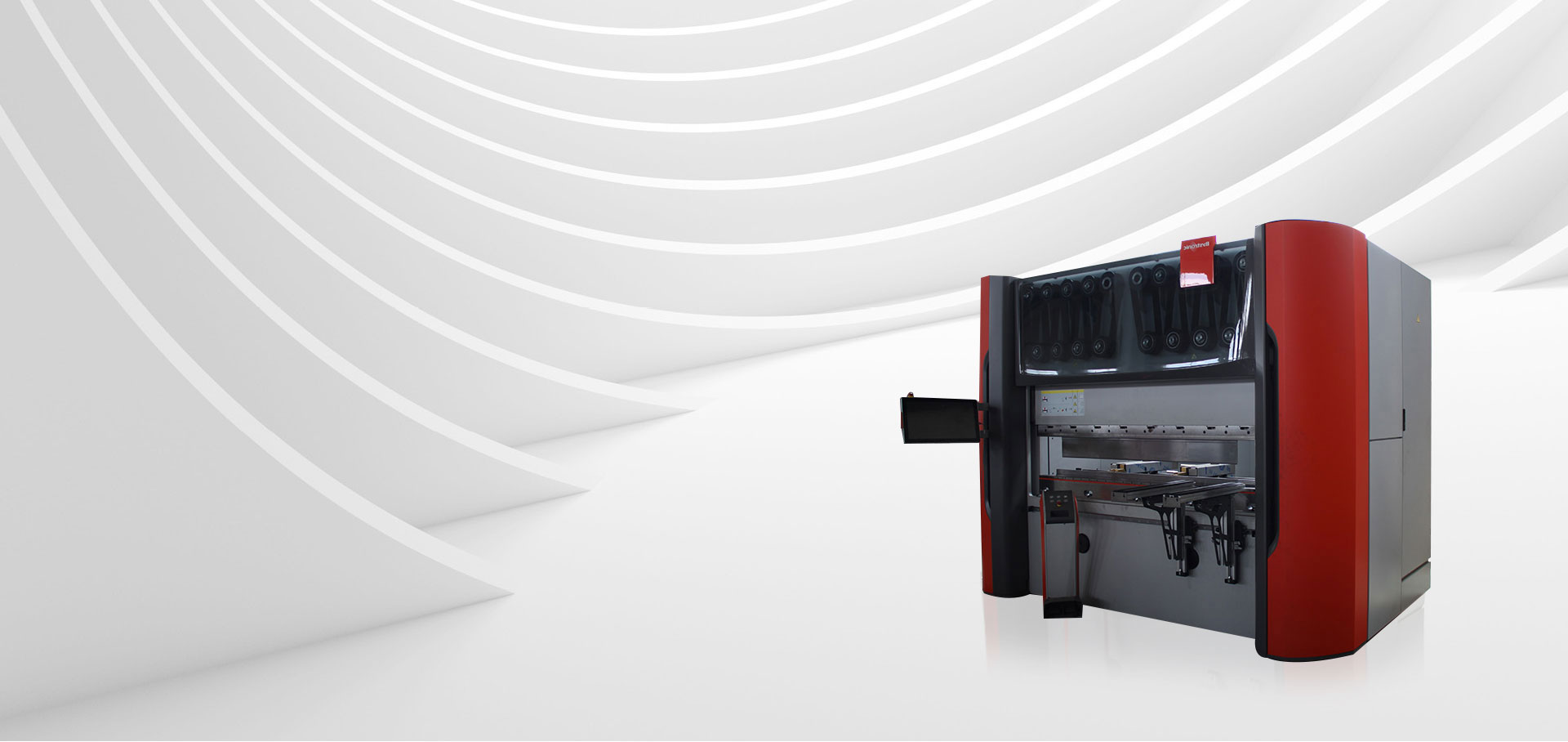
A flexible forming machine that handles almost any bend on almost any part, as long as someone sets up the tools and positions the sheet.
An automated folding machine that produces repeat panel-type parts quickly with very little handling, within its sheet size and thickness range.
| Factor | Press brake | Panel bender |
| Part variety | Very wide, from small brackets to long profiles | Best for panel, enclosure and door-type parts |
| Material thickness | Thin sheet through thick plate, set by tonnage | Mainly thin gauge, often up to about 3 mm in mild steel |
| Part handling | Operator or robot repositions and flips | Manipulator rotates and feeds automatically |
| Tooling | Punch and die changes for many parts | Universal blades, little or no tool change |
| Cycle time on multi-bend parts | Slower, depends on operator skill | Faster and more consistent |
| Deep or very small forms | Strong, with special tooling | Limited by blade and holder geometry |
| Operator skill | High for complex parts | Lower once programs are made |
| Floor space and investment | Smaller footprint, lower entry cost | Larger footprint, higher entry cost |
The press brake is the safer default because it can form nearly anything that fits its bed. Three situations point to it clearly.
Press brakes also cost less to enter. A small CNC press brake with a good back gauge can be productive within days, while a panel bender needs space for loading, sheet storage and programming before it pays back. If you are still defining your part mix, the press brake keeps your options open.
A panel bender earns its price when the same type of part runs often. Look at electrical cabinets, control boxes, elevator panels, kitchen equipment shells, server enclosures and appliance housings. These parts share a pattern: thin sheet, four or more flanges, mostly open or box shapes, and repeat orders.
The manipulator turns the part between bends. Operators load flat blanks and unload finished panels, which cuts labor per part and reduces handling marks on coated or brushed surfaces.
Every bend on every part follows the same program and the same feed path. For long runs, this reduces the operator-to-operator variation that shows up as fit-up problems at assembly.
Panel benders also change over quickly. Because the blades are universal, a new part usually needs a new program and no new tools. That makes them practical even at moderate batch sizes, as long as the parts belong to the same family.
Comparing price tags alone misleads. Compare cost per finished part and ask where each machine loses time.
If you are still deciding how parts will be cut before bending, read CNC Punch Press vs Laser Cutting, because the blank-making method affects bend quality and how many holes sit near bend lines.
Pull your last six to twelve months of orders and work through these steps with real part numbers.
Sort parts by thickness and size. Mark every part thicker than about 3 mm or longer than the panel bender's sheet limit. Those parts stay on a press brake whatever you decide.
Count bends per part. Parts with four or more bends and a box or panel shape are panel bender candidates.
Check repeat rate. A part that returns every month is worth a stored program. A one-off is not.
Estimate minutes per part. Compare current press brake cycle time with the manufacturer's panel bender estimate on the same drawings, and include loading and unloading.
Decide by share of volume. If panel-type parts are a large share of your bending minutes, the panel bender pays back. If they are a small share, buy a better press brake first.
Our bending line includes CNC press brakes from 36 to 320 tons with bed lengths from 1 to 4 meters, a multi-side bending center, and a mobile bending cell, so we can route a part to the machine that suits its geometry. Customers who send drawings through our custom services get cutting, bending, welding and finishing in one flow. For a wider view of how bending fits the whole process, see Custom Sheet Metal Fabrication.
Rarely. A panel bender is limited by sheet size, thickness and the shapes its blades can reach. Thick plate, long profiles, deep channels and special forms still need a press brake, so most shops that buy a panel bender keep at least one press brake.
On multi-bend panel parts in repeat batches, yes, often by a large margin because there is no manual flipping or repositioning. On simple two-bend brackets or one-off jobs, a press brake is usually quicker overall.
It depends on tonnage, bed length and die opening. A small machine handles thin sheet only, while a heavy machine of several hundred tons bends plate. Always check the manufacturer's tonnage chart for your material and bend length.
Most use universal blades that cover a wide range of part shapes, so part-specific tools are rarely needed. Blades still wear and need inspection, and unusual profiles can fall outside what they reach.
Both can hold tight angles with CNC control and angle correction. A panel bender gives more consistent results across a long run because handling is automated. A press brake with a good back gauge and angle measurement matches it on parts it is well suited for.
If your volume is uncertain, outsourcing first is a low-risk way to learn which parts repeat and how many bend minutes you really have. Send us your drawings through the contact page and we will quote bending together with cutting and finishing.













 +86-13771171111 +86-13338110517


 English
 中文简体
 日本語
 Deutsch
 Español
 Bahasa Melayu