Content
Choose a CNC punch press when you make many parts with repeated holes, forms and features, and choose laser cutting when you need complex outlines, fast changes between designs and no tooling. Both cut flat sheet metal blanks that are then bent, welded and finished. Punching shapes metal with a physical tool, while laser cutting melts and blows it away with a focused beam. The right choice depends on part shape, volume, material, thickness and edge quality.
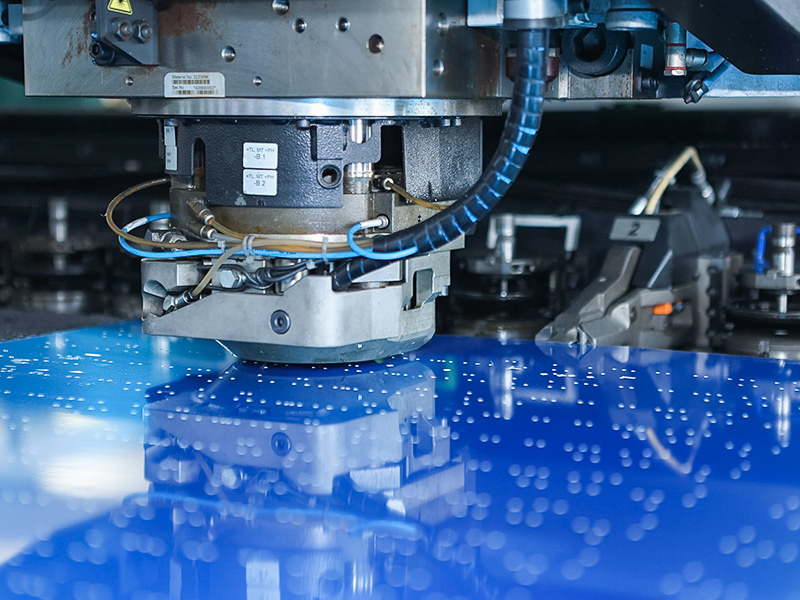
A CNC turret holds many punches and dies. The sheet is moved under the tool, and the press forces the punch through the sheet to make holes, slots, notches and shaped cut-outs. Forming tools can also make louvers, ribs and embosses in the same pass. The Shaofang punch page describes a CNC system that controls punch stroke, speed and pressure.
A focused laser beam melts or vaporizes the metal while assist gas blows the molten material out of the cut. The beam path is controlled by an NC system, and the machine cuts any shape the program describes. The Shaofang laser page lists large worktables, automatic chip removal and gas-assisted cutting.
| Factor | CNC Punch Press | Laser Cutting |
| Tooling | Needs punches and dies, many held in a turret | No physical tooling |
| Complex outlines | Limited by the available tools, or nibbled | Handles intricate shapes easily |
| Repeated holes and forms | Very efficient, can form in the same pass | Cuts every hole as a contour |
| Design changes | Fast if tools exist, slower if new tools are needed | Fast, just load a new program |
| Edge | Clean but may show burr or tool marks | Smooth edge, dross possible depending on settings |
| Thick material | Limited by press tonnage and tools | Larger power range covers thicker plate |
| Materials | Steel, stainless steel, aluminum and some non-metal plates | Steel, stainless steel, aluminum, brass, copper, and non-metals with CO2 lasers |
| Best volume | Medium to high volume of similar parts | Small batches to high mix production |
Figures such as cutting speed and thickness limits depend on the machine, so they are not compared with numbers here. The Shaofang pages give a laser power range of about 500 W to over 15,000 W and example worktables of 3000 mm x 1500 mm and 4000 mm x 2000 mm.
The punch page lists applications in automobile manufacturing, electronic equipment, home appliances and hardware products.
The laser page lists use in machinery manufacturing and sheet metal fabrication, and materials including stainless steel, carbon steel and aluminum alloy.
Cost depends less on the machine and more on how your parts are made. Tooling costs sit in the punch press process, while laser cutting spreads its cost across run time and gas use.
| Cost Driver | Punch Press | Laser |
| Tooling | Standard tools are reused, special shapes need new tools | None |
| Setup time | Tool selection and turret loading | Loading the program and nesting |
| Run time | Short on parts with many features | Cuts each contour in sequence |
| Operating consumables | Tool wear and sharpening | Assist gas, power and lens care |
| Break-even | Lower per-part cost at higher volume of simple parts | Lower total cost at low volume and high mix |
For a one-off prototype, a laser is usually cheaper because there is nothing to tool. For ten thousand identical brackets full of holes and forms, punching can win on cycle time. Between those extremes, ask for a quote on both.
Small changes at the drawing stage lower cost in either process. These are general sheet metal guidelines, so confirm limits with your fabricator.
Both processes leave an edge that may need finishing before bending, welding or coating. The Shaofang laser page lists post-cut checks for edge smoothness and perpendicularity, dross, dimensional verification and surface damage.
| Check | Punched Part | Laser Cut Part |
| Burr | May show a small burr on the exit side | Dross can form on the underside if settings are off |
| Edge profile | Slight rollover and a sheared band | Smooth cut face with fine lines |
| Distortion | Possible near dense hole patterns | Heat effect depends on material and thickness |
| Next step | Deburr if the part will be handled or coated | Clean dross and check squareness before bending |
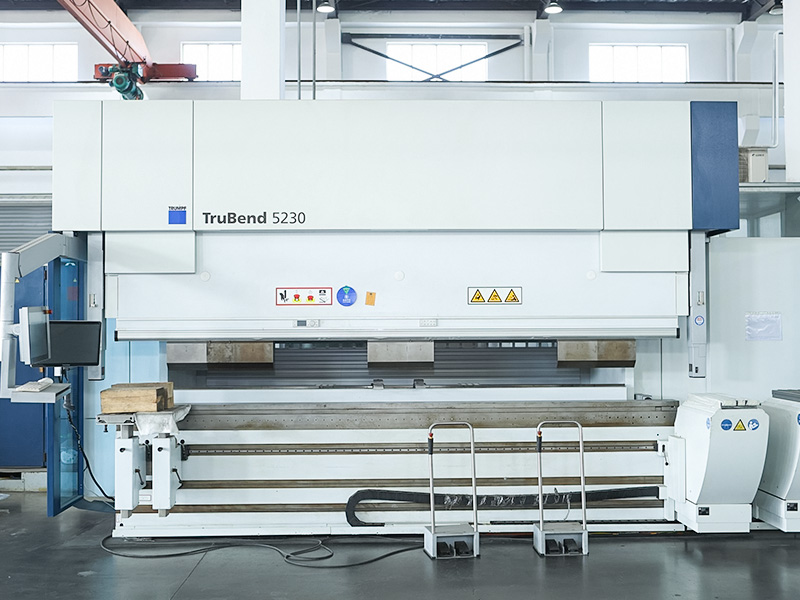
If a flat blank is warped, it can be run through a leveler before bending. See the leveling machine page for the equipment available.
Many fabrication shops use both machines, and some machines combine them. The punch page lists multi-process punching machines, and a laser plus a turret press in one shop lets each part go to the cheaper process.
A common approach is to laser cut large or complex outlines, punch parts with many repeated holes and forms, and send both to bending. A typical sheet metal job flows like this:
Browse leveling, bending, welding and spray coating on the same site.
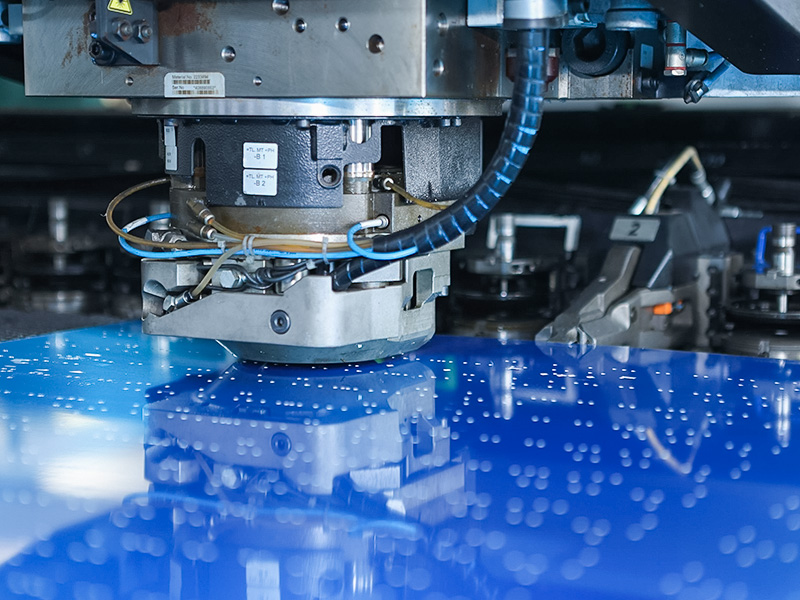 Punch PressEquipment includes a CNC turret punch press with a 3 m x 1.5 m range and multi-process punching machines.
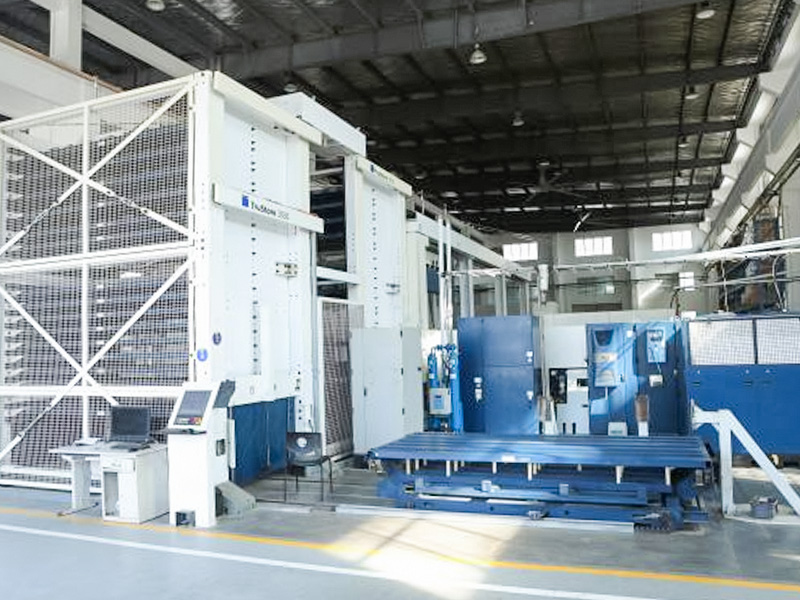 Laser CuttingTruLaser 3030 machines with a 3000 mm x 1500 mm working area, NC control and chip removal.
Read our related guides on choosing a sheet metal laser cutting machine and fiber laser cutting machine buying.
For simple parts with many repeated features in high volume, often yes. For small batches, prototypes and complex shapes, laser cutting is usually cheaper because there is no tooling.
It depends on the part. Parts with many holes and forms can be faster on a punch press, while parts with few features and long contours are cut efficiently by laser.
It can with the right tools or by nibbling, but complex outlines are usually easier and cleaner with a laser.
Both handle steel, stainless steel and aluminum. The Shaofang laser page also lists brass and copper, and non-metals for CO2 lasers.
Yes. Shaofang lists laser cutting, punching, bending, welding and finishing equipment, so cutting, forming and finishing can run in one supply chain.













 +86-13771171111 +86-13338110517


 English
 中文简体
 日本語
 Deutsch
 Español
 Bahasa Melayu