Content
One degree at the bend line can turn a good cabinet into a reject: the door gap widens, the hinge holes shift, and the welder spends twenty minutes fighting a seam that a consistent angle would have closed in seconds. That is why the bending machine often deserves more attention than the laser cutter or the punch press when a sheet metal shop plans its equipment.
In short: a bending machine is a forming tool that presses sheet metal, plate, tubes, or profiles into permanent bends with shaped punches and dies. The machine you choose — and how accurately it holds the bend angle — directly controls scrap rate, welding fit-up, and the speed of your entire production line. The sections below cover the machine types, the angle-control principles, and the specifications that matter most when comparing machines.
Under DIN 8586, a bending machine is a forming machine tool. Its purpose is to produce a bend on a workpiece by plastic deformation along a straight axis, without deliberately changing the material thickness. That separates bending from stamping, which cuts or draws material, and from rolling, which curves the full width of a sheet gradually.
During the working cycle, the back gauge positions the sheet to a set flange length, the ram moves down, and the punch presses the material into the V-profile of the lower die. When the punch lifts, the material springs back slightly to a final angle that is always a little larger than the tool angle. This springback is the single most important physical effect to understand, because it determines how much intelligence the machine's controller needs.
Regardless of type, a bending machine is built from the same core elements:
The schematic below shows the basic principle. In air bending, the sheet touches only the two shoulders of the die, and the punch depth determines the final angle.
Figure 1: The punch pushes the sheet into the V-groove of the die; the distance between the punch tip and the die vertex controls the final bend angle.
Bending machine is an umbrella term. It covers press brakes, folding machines, plate rolls, profile benders, and pipe benders. To see where each one fits, it helps to review the main types of metal processing equipment first, then match the machine family to the workpiece geometry.
The workhorse for sheet metal and plate. A hydraulic ram presses the punch into a V-die, producing straight, full-length bends with high force.
Cabinets, enclosures, brackets, chassis
Servo-electric drives replace hydraulics for cleaner operation, lower energy use, and very high repeatability on thin to medium sheet.
Precision parts, prototypes, pre-painted sheet
A clamping beam holds the sheet while a folding beam rotates the edge. Surfaces stay scratch-free because the tool slides rather than presses.
Long panels, boxes, low-scratch finishes
Three or four rolls curve the sheet gradually into cylinders, cones, or large-radius arcs.
Tanks, ducts, silos, curved roofing
Bends tubes and pipes with mandrel support so the cross-section does not collapse during forming.
Handrails, frames, exhaust lines, furniture
Applies bending force to angles, channels, and other open profiles along their length.
Structural frames, trusses, architectural sections
Forms 2D and 3D wire shapes at high speed from coil or straight wire.
Wire racks, frames, spring preforms
Most fabrication shops use the first two types — hydraulic or electric press brakes — because they cover the widest range of sheet metal bending needs. The rest of this guide focuses on those machines.
Angle accuracy is usually the first question a buyer asks, and the honest answer is not "what does the controller display?" but "what angle does the part come off at?" The challenge is springback: high-tensile steel, stainless steel, aluminium, and pre-painted material all recover differently, and the amount changes with thickness, bend radius, and even coil-to-coil variation.
Modern CNC machines handle this with two measurement principles:
Crowning is the other half of accuracy. The bed and the ram deflect slightly under load, so without compensation the middle of a long part bends differently from the ends. An automatic crowning system offsets that deflection and keeps the angle consistent along the whole working length.
For a deeper look at the sensor technology and the tolerances involved, this analysis of how sheet metal bending machines achieve accurate angle control walks through the operating modes in detail.
In practice, a calibrated CNC press brake with angular measurement and automatic crowning holds bend-angle repeatability of ±0.5° or better, and a good back gauge keeps flange positioning within ±0.02 mm. That level of control is what allows a shop to run bending without trial parts.
Once the basics are clear, a purchase decision usually comes down to six parameters. Compare them on paper, then verify them at the workshop during the trial.
| Parameter | What to check | Why it matters |
|---|---|---|
| Rated tonnage | Rated force in kN or tons, e.g. 100 t, 160 t, 250 t | Determines the maximum thickness and length you can bend without damaging the tool or frame |
| Bending length | Distance between side frames, e.g. 2500 mm, 3200 mm | Full-length parts must fit the working length; short parts waste capacity |
| Control system | Manual, 2-axis, 4-axis, or 6-axis CNC | Sets setup time, angle repeatability, and the complexity of parts the machine can run |
| Angle accuracy | Stated repeatability, e.g. ±0.5° | Directly affects welding fit-up, seam alignment, and reject rate |
| Crowning system | Manual shims or automatic crowning | Keeps the angle even from left to right on full-length bends |
| Speed and cycle time | Approach speed and strokes per minute | Determines how many parts the machine can produce per shift |
For parts thinner than 3 mm, a servo-electric brake saves energy and gives excellent repeatability. For thicker plate and full-length work, the hydraulic version offers more force per euro. Either way, a back gauge and a crowning system should not be optional: without them, angle consistency depends entirely on the operator.
The blank that enters the brake matters as much as the brake itself. Coil set and internal stress from the steel mill make the bend line wander and the angle drift from one sheet to the next. Many shops install a plate leveling machine upstream, because leveling flattens the material and makes the bend behave predictably. If your incoming sheets show a visible bow or twist, budget for that step before you finalize the press brake order.
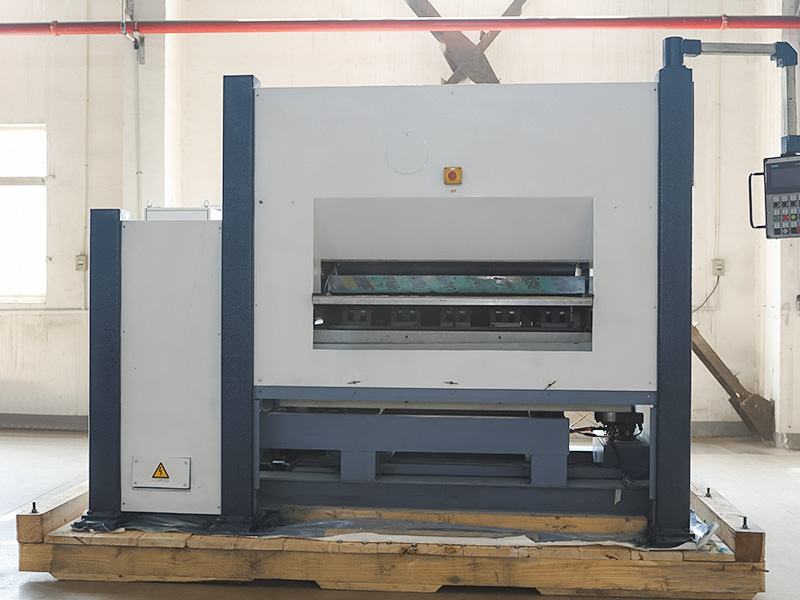 Custom Metal Plate Leveling Machine Manufacturers, FactoryWuxi Shaofang Machinery Co., Ltd. is China Custom OEM/ODM Metal Plate Leveling Machine Manufacturers, Factory, Providing High-Performance...View Product →
When you size the machine, use your thickest full-length part, not your average part. A 250-ton, 3200 mm hydraulic or electric brake with a four-axis back gauge covers a typical job-shop mix, and the CNC bending machine range at Shaofang Machinery includes both drive types. Cycle time matters, but throughput also depends on how many setups you run per day; understanding how the bending machine impacts production efficiency helps you translate strokes per minute into real output before you sign the order.
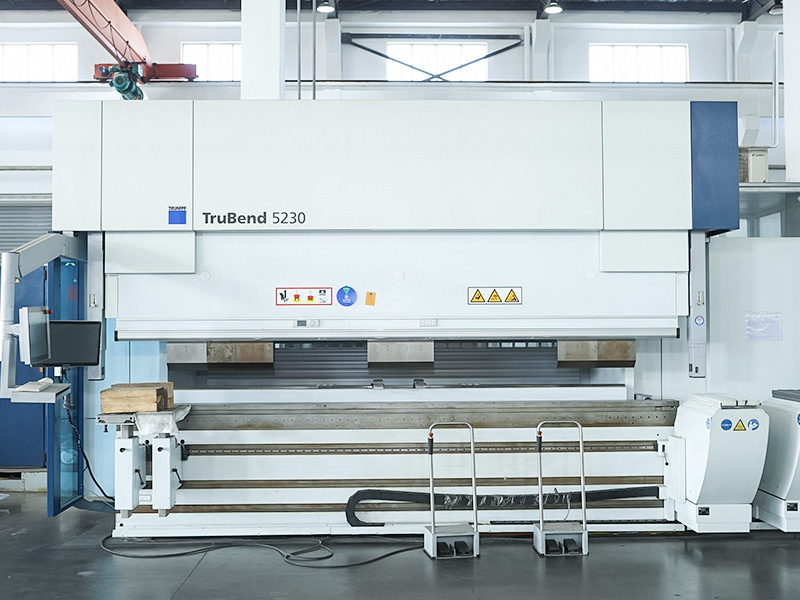 Custom Sheet Metal Bending Machine Manufacturers, FactoryWuxi Shaofang Machinery Co., Ltd. is China Custom OEM/ODM Sheet Metal Bending Machine Manufacturers, Factory, Our Bending Equipment Can P...View Product →
A datasheet tells you what a machine is designed to do; a 30-minute trial tells you what it does with your parts. Run the same four checks on every machine you shortlist.
Bend your own material. Bring one short part and one full-length part from production. Measure the angle at both ends and in the middle; a difference between ends points to a weak crowning system.
Test the back-gauge repeatability. Cycle the gauge ten times and measure the flange position each time; mispositioned flanges create scrap even when the angle is perfect.
Load it near rated capacity. Ask for a full-length bend at 80–90% of the rated tonnage; this is where weak frames, worn tooling, and ineffective crowning become obvious.
Check tooling, calibration, and after-sales response. Confirm which punches and dies are included, whether calibration data can be exported, and how quickly spare parts and service support are available.
Before signing, look at the whole line. Bending does not work in isolation: blanks come from cutting and punching, and bent parts move on to welding and assembly. If the punch press feeding the brake cannot hold position tolerances, the new brake will simply expose the bottleneck. Many shops therefore align the two machines when they invest, and the punch press range that pairs with the brake is designed to deliver the blank accuracy the bending station expects.
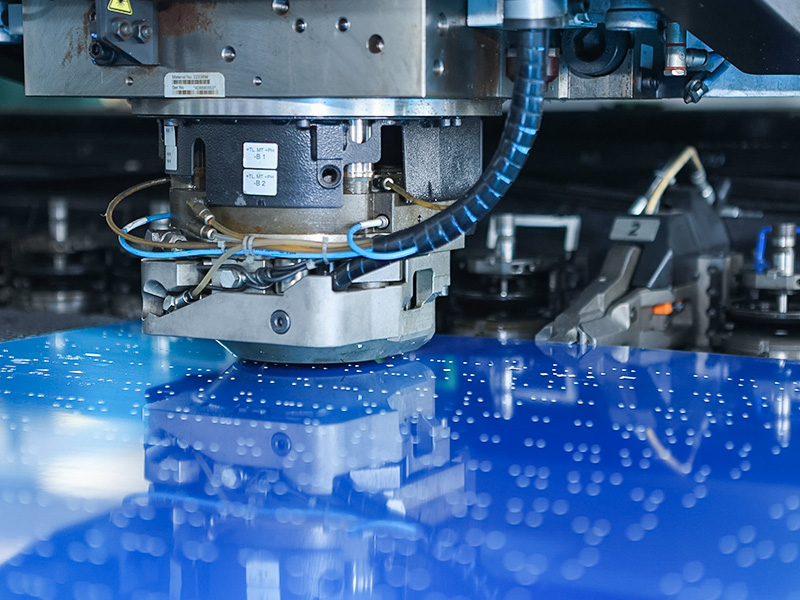 Custom High Precision Punch Press Manufacturers, FactoryWuxi Shaofang Machinery Co., Ltd. is China Custom OEM/ODM High Precision Punch Press Manufacturers, Factory, We Provide Efficient And Hig...View Product →
A bending machine is the generic term for any machine that produces bends: press brakes, folding machines, plate rolls, profile benders, and pipe benders. A press brake is the most common type of bending machine, using a punch and V-die to make straight bends in sheet metal and plate.
For air bending, the required force rises quickly with thickness: doubling the sheet thickness roughly quadruples the force. As a practical reference, a 2-metre bend in 3 mm mild steel needs roughly 50 to 80 tons, while the same length in 6 mm plate climbs to roughly 100 to 140 tons, depending on the V-die opening and the tensile strength of the material.
Springback is the elastic recovery that occurs when the punch lifts: the angle opens slightly because the material returns toward its original shape. A CNC controller compensates in two ways — by calculating an over-bend depth, or by measuring the actual angle with a sensor and correcting the ram position automatically during the bending cycle.
On a calibrated CNC press brake with good tooling, expect bend-angle repeatability of ±0.5° or better and back-gauge positioning within ±0.02 mm. The same machine can still produce parts outside this range if the material thickness varies greatly or the die is worn, so accuracy claims always assume a controlled tooling and material condition.













 +86-13771171111 +86-13338110517

 English
 中文简体
中文简体 日本語
日本語 Deutsch
 Español
 Bahasa Melayu