Content
If you build sheet metal assemblies with riveted joints, you have likely met the classic quality problem: rivets sitting uneven, sheets shifting between strokes, and an operator reworking the same frame twice a shift. The cause is rarely the operator. It is almost always uncontrolled setting force.
A hydraulic press riveting machine removes that variable by driving the punch with a controlled hydraulic cylinder, so every rivet receives the same squeeze under a set tonnage. The payoff is consistent joint strength, lower operator fatigue, and a cycle time you can plan around.
This guide covers what these presses do, which rivet types they handle, and the specifications to compare when you evaluate a machine for your production line.
The short answer: it deforms a rivet shank to clamp two or more sheets together. The hydraulic system lets you control both the ram force and the stroke length, so small variations in sheet thickness do not turn into loose or over-squeezed joints.
The ram pushes the rivet through a prepared hole while a die supports the shank from the other side. For a solid rivet, the die upsets the plain end into a second head. For a semi-tubular rivet, the hollow end curls outward against the die profile. Either way, the joint is permanent and free of heat-affected zones.
The hydraulic drive is what makes this repeatable. A pneumatic press compresses air and loses force near the bottom of the stroke; a hydraulic press holds its rated force through the entire stroke, which is exactly what creates a clean, consistent head shape. That is why a well-built hydraulic press riveting machine remains the standard choice for solid rivets and for jobs that run the same joint all day.
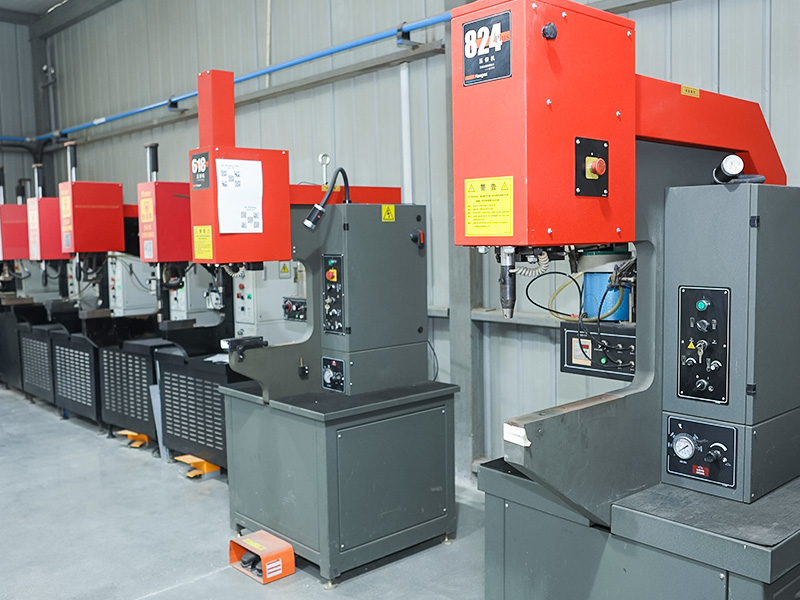 Custom Hydraulic Press Riveting Machine Manufacturers, FactoryWuxi Shaofang Machinery Co., Ltd. is Professional Custom OEM/ODM Manufacturer and Factory of Hydraulic Press Riveting Machines, Our Equip...View Product →
For coated sheets, dissimilar metals, or assemblies that cannot tolerate heat distortion, press riveting has a clear advantage over spot welding machines: no sparks, no surface cleaning, and no risk of burning through a paint or plating layer. Compared with threaded fasteners, a riveted joint costs less per piece and cannot vibrate loose. The trade-off is access — you need room for punch and die on both sides of the joint, and the connection is not meant to be disassembled later.
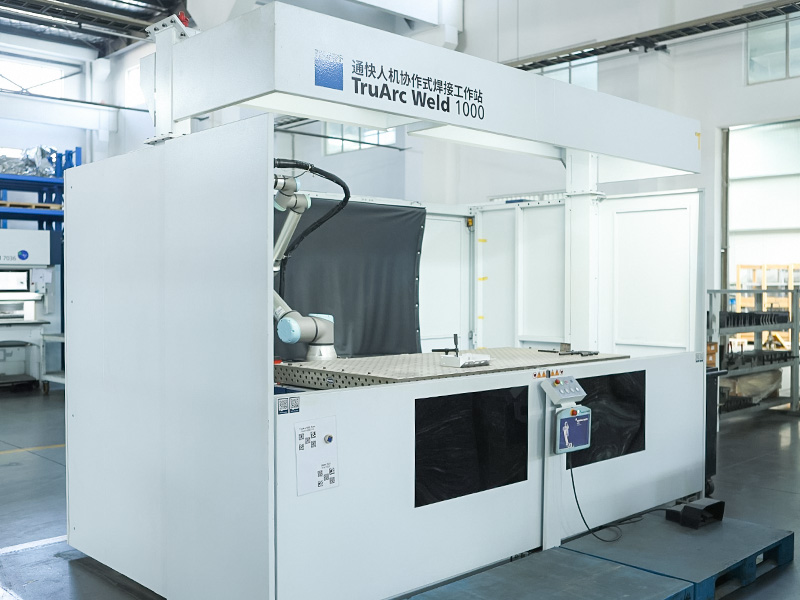 Custom Automatic Welding Machine Manufacturers, FactoryWuxi Shaofang Machinery Co., Ltd. is China Custom OEM/ODM Automatic Welding Machine Manufacturers, Factory, Our Various Welding Processes...View Product →
Which rivet you run determines the tooling and the force setting. A hydraulic press handles all of the common types below, provided the punch and die match the rivet size.
| Rivet type | How the press sets it | Typical application |
|---|---|---|
| Solid rivet | The die upsets the plain shank to form a second head | Truck frames, agricultural equipment, structural brackets |
| Semi-tubular rivet | The hollow end curls outward against the die | Appliances, electrical enclosures, light sheet metal |
| Blind rivet | The press compresses the shell around the mandrel | Panels with one-sided access, repair and retrofit work |
| Self-piercing rivet | The rivet pierces the top sheet and flares into the lower sheet | Automotive body panels, mixed-metal assemblies |
Force requirements vary with rivet diameter and sheet hardness. Small blind rivets run comfortably on a 10-ton press, while large solid steel rivets commonly need 30 tons or more. If you are buying one machine for several products, size it for the largest rivet and let the control system dial down the force for smaller ones.
Start from the part, not the catalogue. Match the machine to the largest rivet you will set and the geometry of the largest assembly you will load, then compare the six specifications below.
The maximum usable force at the ram. Size it for your largest rivet; running near the limit shortens die life and produces inconsistent heads.
The distance the ram travels in one cycle. A longer stroke suits deep parts and eases tooling access, but slows the cycle slightly.
The gap from the frame throat to the ram center. It defines how far from the edge of the part you can place a rivet.
Lets you store force, stroke, and dwell time for each job. If your batches mix several rivet sizes, this matters more than top tonnage.
A C-frame gives good access on large panels; a pillar frame is stiffer under high force. Frame deflection shows up as uneven rivet heads.
Two-hand actuation, anti-repeat logic, and guarding are standard for manual loading, not optional extras.
Most riveting work relies on custom dies. If your parts have unusual geometry or you need fast changeover between products, agree on the tooling layout before ordering — our custom services team can adapt the die set to your exact part shape.
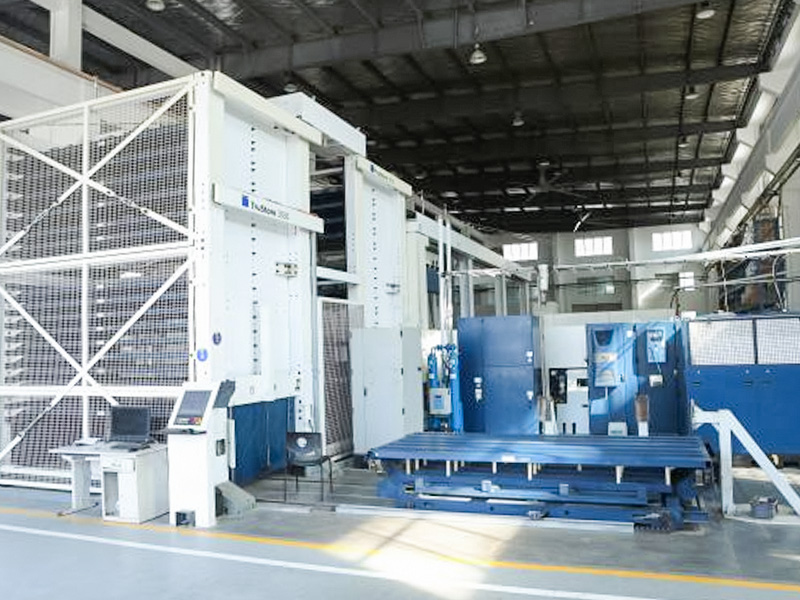
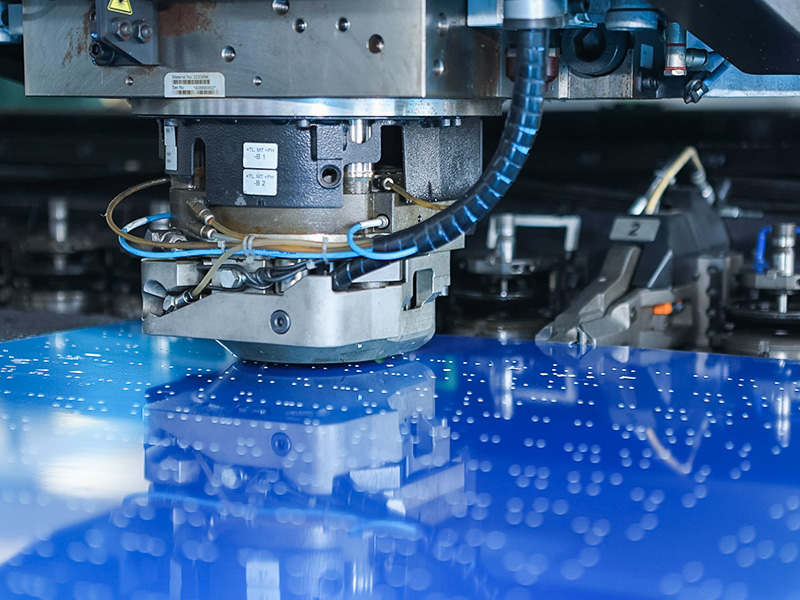
Also plan the line around the machine. In a typical sheet metal cell, a CNC punch press cuts the holes and the riveting press closes the joints. Placing them close together cuts handling time and reduces the chance of damaging hole alignment between operations.
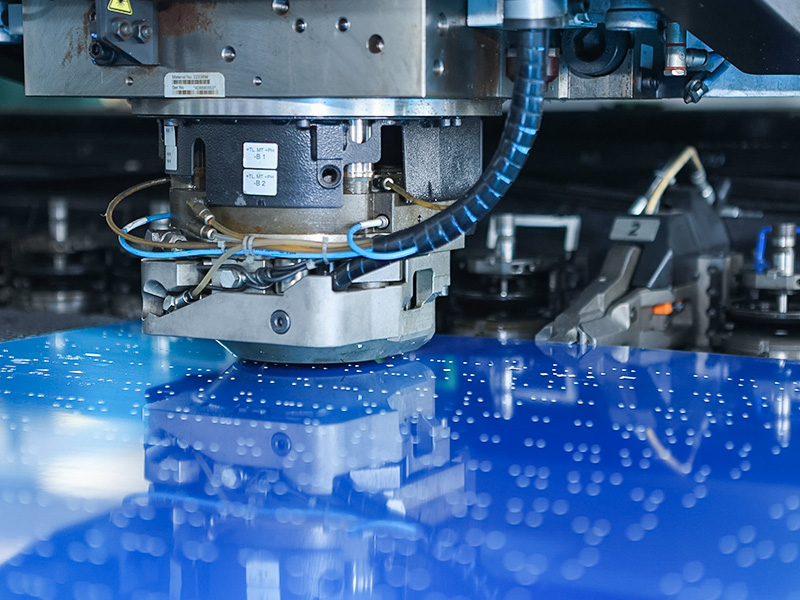 Custom High Precision Punch Press Manufacturers, FactoryWuxi Shaofang Machinery Co., Ltd. is China Custom OEM/ODM High Precision Punch Press Manufacturers, Factory, We Provide Efficient And Hig...View Product →
Consistent joints come from the sequence around the stroke, not only from the stroke itself. A disciplined five-step routine keeps quality stable across shifts.
Hydraulic systems drift when they are neglected. Change the hydraulic oil at the manufacturer's recommended interval, inspect seals around the ram and valves for leaks, calibrate the pressure gauge once a year, and keep the ram ways clean. A two-minute check at shift start costs little compared with a batch of bad rivets.
The same logic guides our own production floor. Before a press is shipped, it goes through our quality control process to verify force consistency, ram alignment, and hydraulic sealing, so the machine is production-ready on arrival.
Tonnage depends on rivet diameter, material, and sheet hardness. Small blind rivets work on 10-ton presses; solid steel rivets often require 30 tons or more. Send sample rivets and part drawings to get an accurate recommendation.
Yes. The tooling changes with the rivet type, and the press settings adjust for force and stroke. A programmable machine makes changeover fast when you run mixed batches.
For manual loading, expect a few seconds per rivet plus handling time. A rotary index table or automatic rivet feeding raises throughput substantially when you repeat the same joint all day.
The essentials are regular oil changes, seal inspection, pressure-gauge calibration, and keeping the ram and ways clean. The right interval depends on cycle count, so log your daily runs.
If you are evaluating a press for a specific product, send us your part drawings and rivet samples. We will recommend the frame size, tonnage, and tooling configuration that fit your production program.













 +86-13771171111 +86-13338110517

 English
 中文简体
中文简体 日本語
日本語 Deutsch
 Español
 Bahasa Melayu