Content
In the modern landscape of industrial manufacturing, the CNC Laser Cutting Machine stands as the definitive solution for high-precision fabrication. It integrates computer numerical control (CNC) with high-power laser technology to cut materials with a level of accuracy and speed that traditional mechanical cutting methods cannot match. The primary conclusion is that for industries requiring intricate geometries, minimal material waste, and rapid production speeds, CNC laser cutting is not just an option but a necessity. It transforms digital designs into physical parts with exceptional edge quality, eliminating the need for extensive post-processing. This technology has revolutionized sectors from automotive to aerospace by providing a versatile, contactless cutting tool that handles a vast array of materials with consistent repeatability.
At the heart of this machinery lies the synergy between advanced optics and motion control systems. The term "CNC" refers to the computer numerical control system that dictates the movement of the laser head. This system reads G-code instructions, which translate a computer-aided design (CAD) model into precise coordinates. The laser source generates a high-intensity beam of light, which is then focused through a lens to a tiny spot on the material's surface. This focused spot creates intense heat density, causing the material to melt, burn, or vaporize. Simultaneously, a coaxial gas jet—often oxygen or nitrogen—blows away the molten material, leaving a clean kerf.
Unlike mechanical cutting, which relies on physical force and hard tooling, laser cutting is a non-contact process. This means there is no physical pressure applied to the workpiece, significantly reducing the risk of mechanical deformation. The workpiece remains stationary on the cutting bed while the gantry system moves the laser head with dynamic velocity and acceleration. This capability allows for the cutting of highly complex shapes and sharp internal corners that would be impossible to achieve with a standard milling cutter.
When evaluating a CNC Laser Cutting Machine, one of the most critical distinctions lies in the type of laser source utilized. The two dominant technologies are CO2 lasers and Fiber lasers. Understanding the difference is vital for selecting the right tool for specific applications.
CO2 lasers have been the industry standard for decades. They function by exciting a gas mixture (carbon dioxide, nitrogen, and helium) with electricity. This technology produces a wavelength of roughly 10.6 micrometers, which is heavily absorbed by non-metals such as wood, acrylic, plastics, and textiles. CO2 lasers are exceptionally well-suited for cutting thicker materials and providing a smoother edge on plastics. However, they are generally less efficient when processing metals, especially reflective ones like copper and aluminum.
Fiber lasers represent a more modern evolution, using solid-state technology to generate a beam with a wavelength of approximately 1.064 micrometers. This shorter wavelength is absorbed exceptionally well by metals, including highly reflective ones. Fiber lasers convert electrical energy into laser light with much higher efficiency than CO2 lasers. They offer significantly faster cutting speeds on thin to medium-thickness sheet metal and require almost no maintenance due to the absence of mirrors or moving parts within the resonator.
To better visualize the differences, the following table outlines the performance characteristics of both technologies in an industrial context.
| Feature | CO2 Laser | Fiber Laser |
|---|---|---|
| Wavelength | 10.6 μm | 1.064 μm |
| Metal Cutting Efficiency | Moderate | Very High |
| Non-Metal Capability | Excellent | Limited |
| Maintenance Requirements | High (Gas refills, mirrors) | Low |
| Operational Cost | Higher | Lower |
The adoption of CNC laser cutting machines has surged across various industries due to their multifaceted advantages. The benefits go beyond simple cutting, influencing the entire production lifecycle from design to final assembly.
One of the strongest selling points of the CNC Laser Cutting Machine is its ability to process a diverse range of materials. While the specific capability depends on the laser power and type, the range is generally extensive.
In the metalworking sector, fiber lasers dominate. They slice through carbon steel, stainless steel, and aluminum with ease. High-power fiber lasers can now cut carbon steel up to 30mm or more in a single pass. For thinner gauges, the speed is so rapid that the cutting head often becomes the bottleneck in the production line. Stainless steel responds well to high-pressure nitrogen cutting, which produces an oxide-free edge that is ready for welding without additional cleaning.
CO2 lasers retain the crown for non-metals. These machines are widely used in the signage industry to cut acrylic and plastics. They are also indispensable in the textile industry for cutting fabrics without fraying the edges, and in woodworking for creating intricate inlays and marquetry. Even composite materials and certain ceramics can be processed using specific laser parameters.
Operating a CNC Laser Cutting Machine involves significant safety considerations due to the high-voltage electronics and high-energy light beams. Modern machines are enclosed in fully light-tight housings equipped with safety interlocks that immediately cut the laser beam if the door is opened. Operators must also be protected from fumes and particulate matter generated during the cutting process. An effective fume extraction system is mandatory to remove toxic gases, especially when cutting coated metals or plastics.
Maintenance regimes have evolved with the technology. Fiber lasers, being solid-state, have eliminated the need for gas refills and mirror alignment required by CO2 tubes. However, the cutting head optics still require regular attention. The protective window that covers the focusing lens must be inspected and replaced regularly to prevent spatter from damaging the expensive lens. Regular cleaning of the linear guides and racks ensures the motion system maintains its high accuracy. Predictive maintenance features in modern CNC controls can now alert operators before critical failures occur, further reducing downtime.
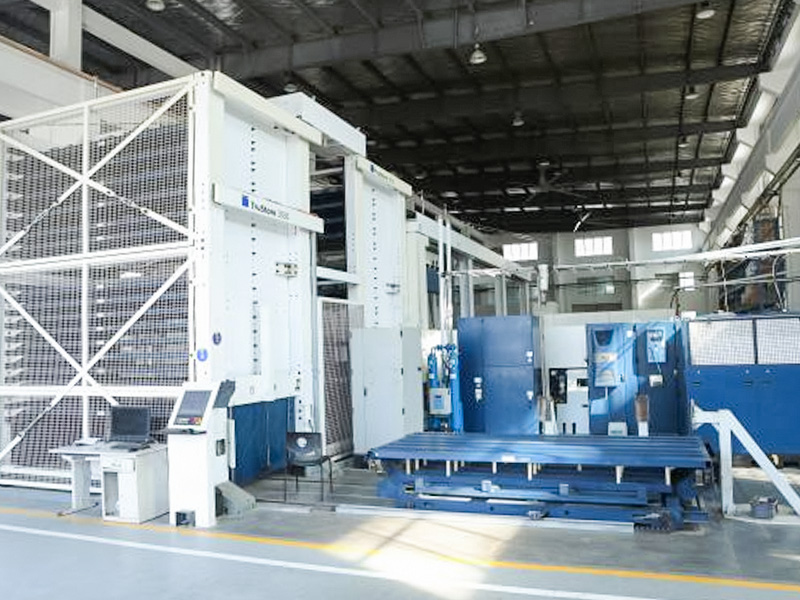
The future of CNC laser cutting lies in full automation and smart integration. As Industry 4.0 standards become the norm, laser cutting machines are increasingly being integrated into fully automated production lines. This includes automated loading and unloading towers, robotic part sorting, and connection to enterprise resource planning (ERP) systems.
Artificial intelligence is beginning to play a role in optimizing cutting paths and monitoring cut quality in real-time. Smart sensors can detect if a laser cut is incomplete and automatically recut the part or pause the machine for inspection. Furthermore, beam-shaping technologies are being developed to tailor the laser intensity profile for specific materials, allowing for even faster cutting speeds and improved edge quality on difficult-to-process metals. Ultimately, the CNC Laser Cutting Machine is transitioning from a standalone tool into a smart, connected manufacturing hub.










 +86-13771171111 +86-13338110517

 English
 中文简体
中文简体 日本語
日本語 Deutsch
 Español
 Bahasa Melayu