Content
In modern manufacturing and metalworking industries, high-precision and high-efficiency punching equipment has become a key factor for enterprises to enhance their competitiveness. High Precision Punch Press has gradually replaced traditional punching machines with its excellent precision and production efficiency, becoming an indispensable core equipment in sheet metal processing and metal stamping industries. Whether in automotive manufacturing, electronic equipment production, aerospace, or high-end industrial parts manufacturing, high-precision punch presses play a crucial role.
The core advantage of a high-precision punch press lies in its precise punching capability. Compared with traditional mechanical punch presses, High Precision Punch Press uses advanced servo control systems and precision molds, significantly reducing errors during punching. In sheet metal processing, even minor deviations can affect the assembly and functionality of the final product, making precision a critical metric for equipment value.
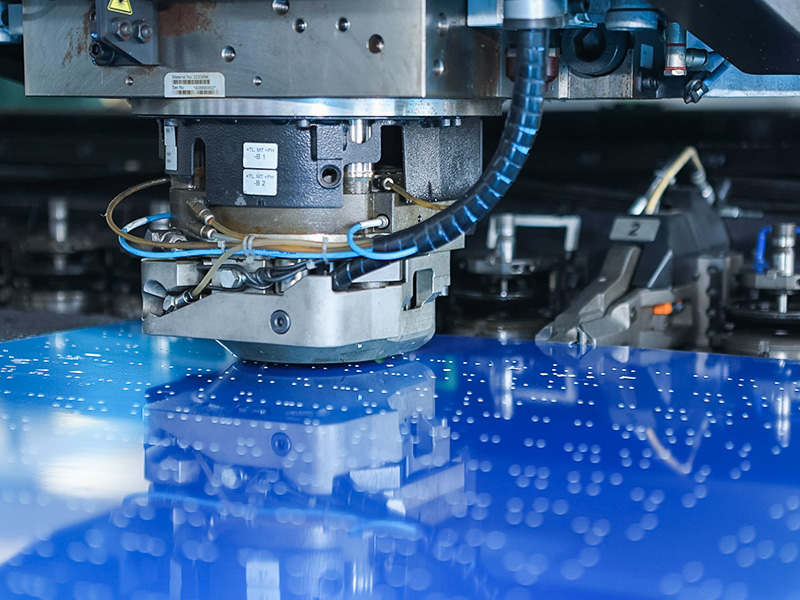
During operation, High Precision Punch Press controls the stroke, speed, and force of the punch to achieve precise cutting of the sheet metal. Unlike traditional mechanical presses that require manual adjustments, high-precision presses can automatically adjust punching parameters to accommodate different thicknesses and materials, improving production efficiency while ensuring consistent product dimensions and hole quality.
Additionally, High Precision Punch Press is often combined with CNC Punching Machine technology for fully automated processing. Through programming, operators can preset the size, spacing, and shape of the punched holes, standardizing the production process and reducing human error. This automation not only increases output but also makes the production of complex parts possible, revolutionizing the metalworking industry.
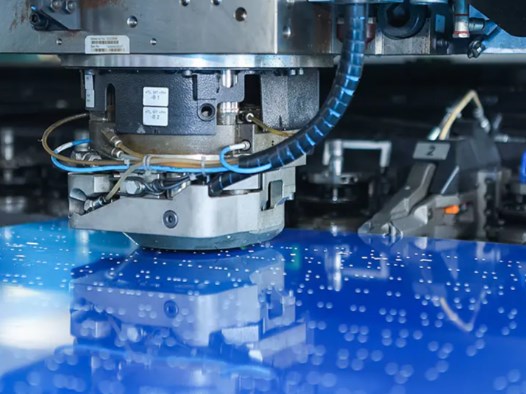
In modern manufacturing, High Precision Punch Press has a wide range of applications, covering almost all industries requiring high-precision metalworking. In the field of Sheet Metal Fabrication, high-precision presses meet various sheet metal processing needs. Whether processing ultra-thin electronic enclosures of 0.5 mm or thick mechanical structural plates of several millimeters, the high-precision press ensures consistent punching quality, allowing companies to produce small batches of high-precision parts efficiently and cost-effectively.
In Metal Stamping Equipment applications, high-precision presses improve the yield rate of stamped parts due to their stable punching capability. Traditional presses are prone to wear and deviation during continuous production, whereas High Precision Punch Press maintains stable output over long periods. This is especially important for automotive components, household appliance panels, and high-precision industrial parts, where strict requirements exist for dimensions and hole positions.
In the electronics and electrical equipment industry, High Precision Punch Press is equally indispensable. Precision punching technology ensures high dimensional accuracy for metal casings and internal structural components, guaranteeing product stability and durability. Whether for smartphone housings, laptop panels, or high-end electronic instruments, high-precision presses enable efficient and accurate processing.
The greatest advantage of High Precision Punch Press is its capability for Precision Metalworking. Modern industrial production requires not only accurate dimensions but also precise hole positions, shapes, and surface quality. High-precision presses achieve these standards through advanced punching molds and CNC control.
From a technical perspective, high-precision presses outperform traditional presses in several ways. They control punching pressure and stroke via Industrial Punching Technology, preventing material deformation or burr formation. The balance of punching speed and precision allows for high-speed production without compromising quality, which is crucial for both large-scale and small-batch high-precision production.
Moreover, high-precision presses significantly reduce material waste. Traditional presses often produce excessive scrap due to mold wear or improper operation, whereas High Precision Punch Press precisely controls punching positions and force, lowering defect rates and saving material costs.
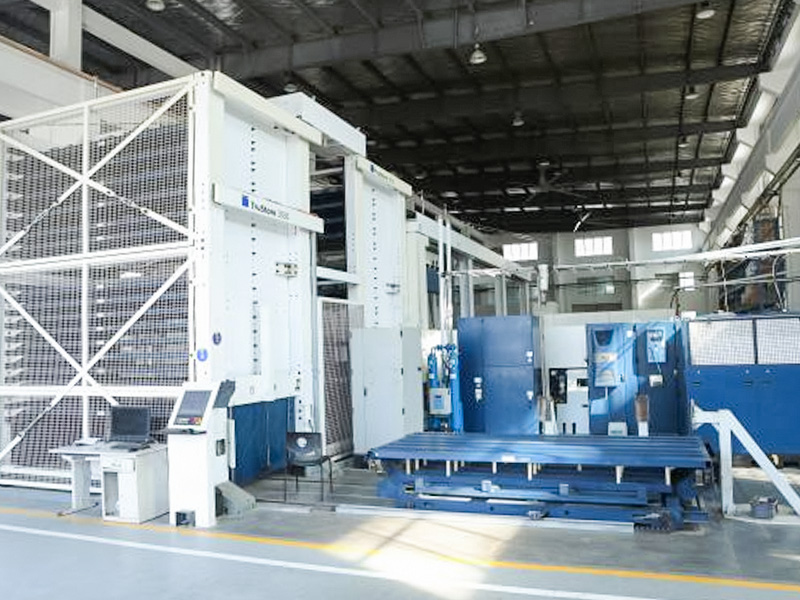
In terms of automation, high-precision presses can integrate with CNC systems, automatic feeding systems, and robotic arms, achieving continuous, unmanned production. This not only increases production efficiency but also reduces reliance on operator skill, enabling companies to expand capacity while maintaining quality.
For manufacturing enterprises, the value of a high-precision punch press extends beyond productivity—it enhances product competitiveness. In automotive parts manufacturing, for example, stringent precision requirements demand consistent hole positions and dimensions. High Precision Punch Press ensures assembly precision and part longevity, directly affecting vehicle performance and safety.
In aerospace, precision stamping is indispensable. Aircraft structural components have extremely high requirements for material and machining accuracy, and even minor deviations can impact flight safety. High-precision presses provide reliable processes for producing aerospace parts while maintaining high efficiency.
In electronics manufacturing, high-precision presses produce enclosures, heatsinks, and metal brackets with strict dimensional accuracy. When combined with automation, they enable mass production while reducing labor costs.
High-precision punching is often the core of front-end processing in metal fabrication. It sets the foundation for subsequent welding, assembly, and surface treatment, significantly improving the efficiency and quality of the entire manufacturing chain.
Choosing the right High Precision Punch Press is crucial for any metalworking enterprise. First, the press’s tonnage and stroke range should match the material type and thickness. Different materials have varying strength and elasticity, and the press must provide sufficient and stable force to ensure accurate punching.
Mold selection and configuration are equally important. High-precision presses typically come with adjustable or quick-change molds to accommodate different hole sizes and shapes. In production, mold precision directly affects part quality. When integrated with CNC Punching Machine systems, multiple punching programs can be switched quickly, improving production flexibility.
Operator skill and training remain critical. Despite increased automation, operators must understand the equipment’s structure, control system, and punching parameters. Proper training allows them to identify anomalies and prevent equipment damage or product scrap.
Maintenance involves regular inspection of mechanical and electronic systems. Guide rails, sliders, hydraulic systems, and drive mechanisms need lubrication and cleanliness. Even minor mechanical wear or electronic error can impact product quality. Scientific maintenance schedules and records are essential for long-term stable production.
Enterprises may also upgrade systems using Industrial Punching Technology to calibrate pressure, stroke, and speed, maintaining high precision during extended production runs.
Although initial investment in a high-precision punch press can be high, its long-term economic value is clear. It reduces scrap and material waste, saving raw material costs and minimizing rework and downtime. High automation levels increase output without compromising quality, enhancing unit productivity. Consistent quality allows enterprises to secure high-value orders in aerospace, precision electronics, and high-end machinery, yielding greater profits.
High-precision presses also enable workflow optimization. Integration with Sheet Metal Fabrication, automated feeding, and downstream processing creates efficient, precise, and traceable production systems, improving overall operational efficiency and competitiveness.
As manufacturing demands higher precision, efficiency, and intelligence, High Precision Punch Press technology continues to advance. Future trends include automation, smart control, and informatization.
Intelligent control systems will further enhance punching accuracy. AI and big data allow real-time monitoring of punching conditions, automatically adjusting force and stroke, predicting errors and wear, and maintaining stable output. Combined with Precision Metalworking technology, accuracy could reach the micron level, meeting strict industrial standards.
Automation will integrate high-precision presses into fully unmanned production lines. CNC systems, robotic arms, automatic feeding, and inspection equipment can create continuous, high-efficiency workflows, reducing labor costs and minimizing human error.
Advances in material and mold technology will allow high-precision punching of thinner and harder sheets while maintaining accuracy. Longer mold life and rapid-change systems improve production flexibility and economic efficiency.
Industrial IoT and data analytics will enable smart maintenance and remote monitoring. Enterprises can track equipment status in real-time via cloud systems, anticipate maintenance needs, and optimize production to reduce downtime.
Globally, High Precision Punch Press is increasingly important. Emerging markets’ demand for high-precision metal products is growing, making precision stamping a key tool for competitive manufacturing. In automotive, aerospace, electronics, and medical industries, the ability to deliver stable, high-quality parts attracts international clients and long-term contracts.
Environmental and sustainability requirements also drive high-precision press adoption. High material utilization and low waste help enterprises achieve green manufacturing goals, complying with international environmental standards and improving global brand image.
High-precision presses are expected to become core equipment in Industry 4.0 and smart manufacturing, moving beyond traditional punching to become integrated solutions for metalworking, automation, and intelligence, creating greater enterprise value.
Overall, High Precision Punch Press leads modern metalworking with its accuracy, stability, and efficiency. Whether in Sheet Metal Fabrication, Metal Stamping Equipment production, or high-precision parts manufacturing, it demonstrates irreplaceable value. Integrated with CNC Punching Machine, intelligent control, and industrial punching technology, it improves productivity and generates significant economic benefits.
With advancements in intelligent manufacturing, automation, and industrial internet integration, high-precision presses will further enhance technology and applications. Enterprises that select, operate, and maintain equipment properly can fully leverage its advantages, achieving sustainable development and competitive growth in high-precision metalworking.
High Precision Punch Press is more than just punching equipment; it is a cornerstone for modern manufacturers pursuing efficient, precise, and intelligent production.













 +86-13771171111 +86-13338110517

 English
 中文简体
中文简体 日本語
日本語 Deutsch
 Español
 Bahasa Melayu